Career Explorer Test
Each of the 30 questions describes an everyday situation with four ways to respond. Pick the one that fits what you would do. It takes about 6 minutes, and at the end you see your leading interest type with a short description.
Realistic
Almost any task gets the hands-on treatment from a Realistic type.
The same preference has a price. Long meetings and paperwork wear down patience early, and those tasks sink to the bottom of the pile while the physical work gets done first. Tools and machines are familiar company. A delay on the project is harder to take than weather or dirt.
Given a dripping tap or a stalled lawn mower, these people pick up a wrench before anyone has finished discussing it. A result that can be touched or switched on counts for more than a plan describing it. Jobs such as electrician or park ranger fit that pull, because the day ends with something that runs or has been cleared. Outdoor and technical settings feel natural, and a day spent moving between a workshop and a job site passes quickly.
Realistic people can start a project with a short written note on who needs to hear what.
Investigative
Investigative people keep returning to how and why something works.
The care that makes their conclusions hold up also slows them down when a quick, confident call is needed. A carefully built argument sometimes fails to move a person who simply wants to be led.
Faced with an odd result, they collect evidence and test an explanation before anyone acts on a hunch. A logic puzzle or a strange pattern in a data table can hold their attention for hours with no payoff beyond the answer. They want the mechanism, and a vague reply rarely satisfies them.
Lab research or data analysis, for example, hands them problems that stay open long enough to think about. Software and medical diagnosis draw this type for the same reason: every case has a cause waiting to be found.
It's worth deciding in advance how much evidence will be enough for a given question, then calling it done when that point is reached.
Artistic
An open task comes back personal from someone Artistic.
Handed a blank page or a loose brief, they begin by asking what would be new here. Projects without a fixed procedure give them room, and even a routine job tends to get reworked until it carries a personal stamp.
Illustration and songwriting draw these people, since the day asks for something that did not exist yesterday. Ideas arrive from odd directions, and a half-formed sketch is often enough to get started. Color and phrasing matter to them long before the practical details do.
Repetition drains them quickly. A team built around one fixed way of working may also push back on the unfamiliar approach they bring, which can leave a good idea waiting a long time for a hearing.
Artistic types might keep one dull recurring task on a fixed day each week, so it stops using up energy that the open projects need.
Social
Social people notice who is in the room before what is in it.
A friend with a problem or a classmate stuck on an assignment gets full attention, and everything else waits. Time spent on someone else's progress or comfort tends to leave these people with more energy than they started with.
Tasks built around machines or spreadsheets, with little human contact, can feel flat. Steady attention to people also sometimes pushes a system's needs aside, and a process that needed care quietly falls behind.
Teaching and nursing give that attention a daily home, and so do community programs and counseling. Mentoring a younger teammate suits the same impulse, and group settings work as well as one-to-one talks.
Others bring their worries to this type because the listening comes without effort, and the replies are usually kind and practical.
It helps to block out a fixed hour each week for the data or equipment side of things, before the next person asks for help.
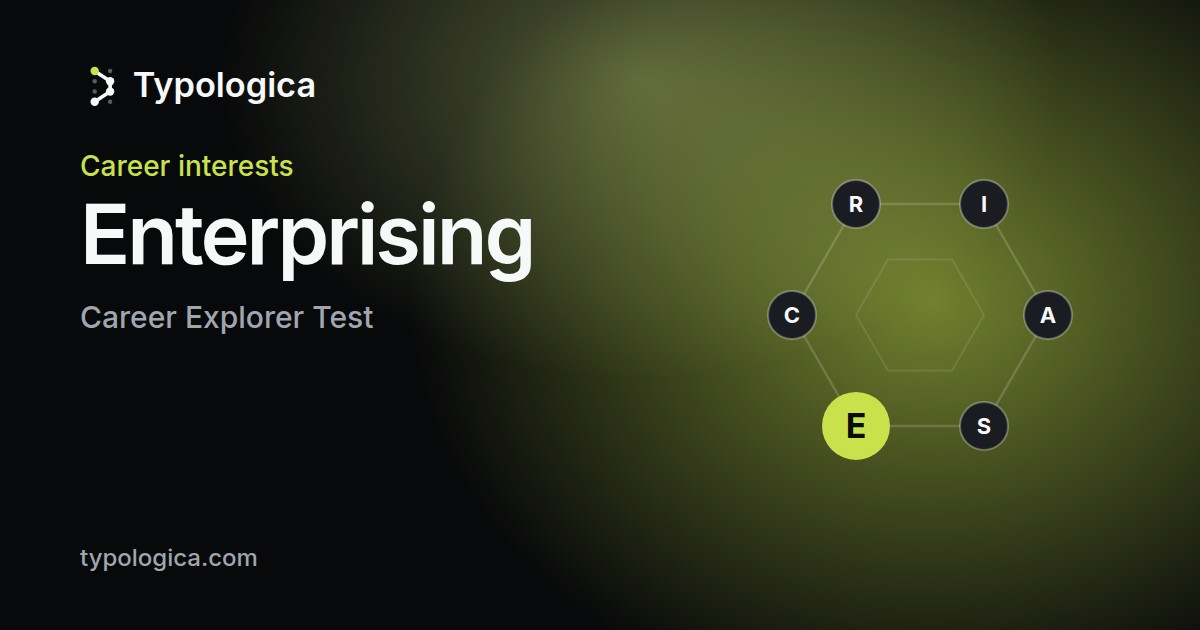
Enterprising
When an idea needs a push, an Enterprising type steps forward.
A long stretch of slow, solitary analysis gets old fast. Their pace sometimes runs ahead of the evidence, and a plan launched with enthusiasm can turn out to have needed another week of checking. Marketing and law attract this type for similar reasons: someone has to make the case and close it.
These people pitch and negotiate without waiting for permission, and a stalled plan tends to start moving once they join. In a group, they are usually the one who says what should happen next and who should do it. Meetings are where they come alive. A clear stake and a chance to be noticed for the result sharpen their focus. Running a small business or leading a sales team gives them stakes they can see.
Enterprising types could ask one trusted person to hunt for the soft spot in a plan before it goes out.
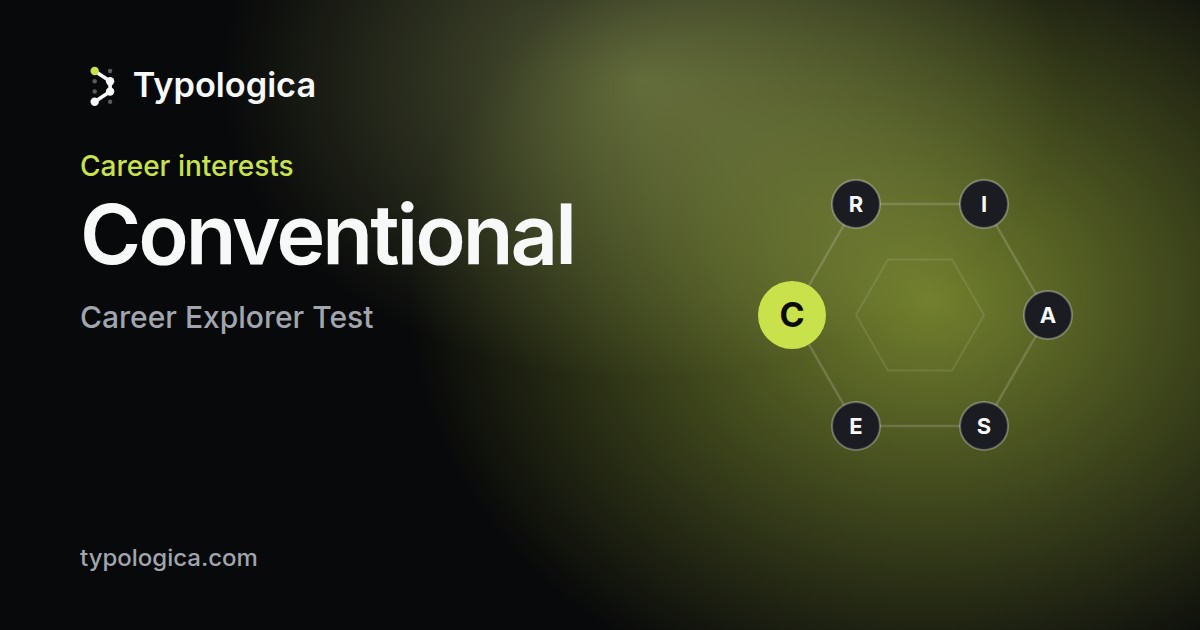
Conventional
Records left in a mess get put into clear order by Conventional people.
Accounting and office administration suit this preference, for example, because accuracy keeps a whole operation running. Given a pile of files or receipts, these people set up a system, follow the procedure exactly and check the result against a standard.
Work with no rules and no stated answer feels uncomfortable. A familiar method can also crowd out a better one that has not become standard yet, and an unusual request may sit unanswered until someone defines it.
A finished task that can be verified feels settled to them. Checklists and clear labels make the day easier to hold together, and a mistake in a record bothers them until it is corrected. What this type hands over arrives complete and in the right place.
It is useful for Conventional types to test one new method on a small task each month, with the old procedure kept as a fallback.
Keys 1–4 pick an answer
Continue the test?
Answers not sent
The result didn’t arrive because the site couldn’t be reached. All your answers are saved in this browser, so there’s no need to retake the test.
Your type:
One type that explains it all
Five tests, five results, and not one tells you why the same things keep happening to you. The CoreTypes system gives the answer many people spend years looking for: why your life plays out exactly the way it does.
Take the free testOther types
Select a type to read its description and compare it with yours.
About the test
Methodology
The test follows Holland's model of vocational interests, in which work preferences gather around six areas named Realistic, Investigative, Artistic, Social, Enterprising and Conventional (background: the overview of the six-type model). All questions were written for this site.
The 30 questions describe everyday situations, five per area, and each offers four answers ranging from a faint to a strong draw. An answer adds points to the area its question belongs to. The area with the larger total gives the result, while the bars on the result screen show all six totals as percentages of the maximum for that area. A narrow gap between neighboring areas is worth reading too.
The six areas sit around a hexagon: Realistic and Investigative are near neighbors with plenty in common, and the corners opposite each other share little. Each type name labels a region of that map.
Every area contains jobs with widely varying preparation, and the test relies on the answers a person gives about themselves. The scores capture what a person finds absorbing, while ability is a separate topic with its own tools (see the overview of career assessment).
Author: Lex Tarrel, Creator of the CoreTypes system
Sources
- Holland, J. L. (1959). A theory of vocational choice. Journal of Counseling Psychology, 6(1), 35–45. doi:10.1037/h0040767
- Holland, J. L. (1997). Making Vocational Choices: A Theory of Vocational Personalities and Work Environments (3rd ed.). Odessa, FL: Psychological Assessment Resources.
- Nye, C. D., Su, R., Rounds, J., & Drasgow, F. (2012). Vocational interests and performance: A quantitative summary of over 60 years of research. Perspectives on Psychological Science, 7(4), 384–403. doi:10.1177/1745691612449021
- Phan, W. M. J., & Rounds, J. (2018). Examining the duality of Holland's RIASEC types: Implications for measurement and congruence. Journal of Vocational Behavior, 106, 22–36. doi:10.1016/j.jvb.2017.11.011
Frequently asked questions
How long does the career explorer test take?
About six minutes. The test is short enough to finish in one sitting, and each question is a quick everyday scene with little to look up or think over.
Is it fine to retake the test later?
Yes. Interests shift with experience, so many people come back after some months or years to see how the picture has moved. A result reflects current preferences.
Is this test only for students?
No. The situations are everyday ones, so the test works for a student exploring options and for an adult weighing a change alike.
Does the test pick a job for me?
The result names the kind of work that draws a person, with the activities and example jobs that go with it. One type covers many different roles, so picking a specific job is the next step, taken from that direction.
Is a high result a sign that I would do well in that work?
The test registers what draws a person in and holds attention. Interest and ability are different things, and the result reports the first of them.