Attachment Style Quiz
Read each situation and pick the answer that fits what you would do with a romantic partner, real or imagined. The quiz takes about 6 minutes. At the end you get one of four attachment styles and a plain description of how that style shows up in close relationships.
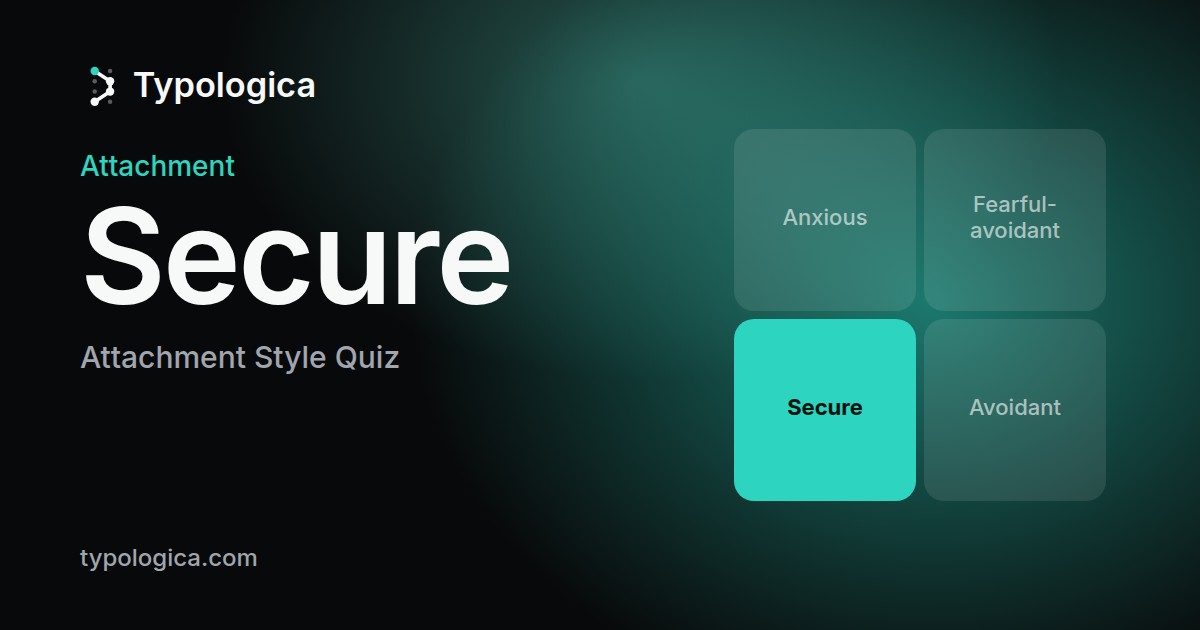
Secure
People with a secure style expect closeness to hold and a partner to lean on.
A bad day at the office gets talked through at the kitchen table, and the help offered in return is accepted without fuss. A favor gets asked for as plainly as the salt.
Small frictions are taken at face value. A late reply is just a late reply, and a disagreement about money is settled as a question of money, with no verdict on the relationship attached.
Inner life is shared readily. Plans and worries reach the partner while they are still half-formed, and a plain "I'm not sure yet" comes easily.
Closeness and independence sit side by side. A weekend with friends or a solo project gets announced as casually as dinner for two, and neither needs defending. A change of plans gets a shrug and a new date.
A secure style does well to keep an unhurried evening free for whatever has piled up, even when the calendar looks full.
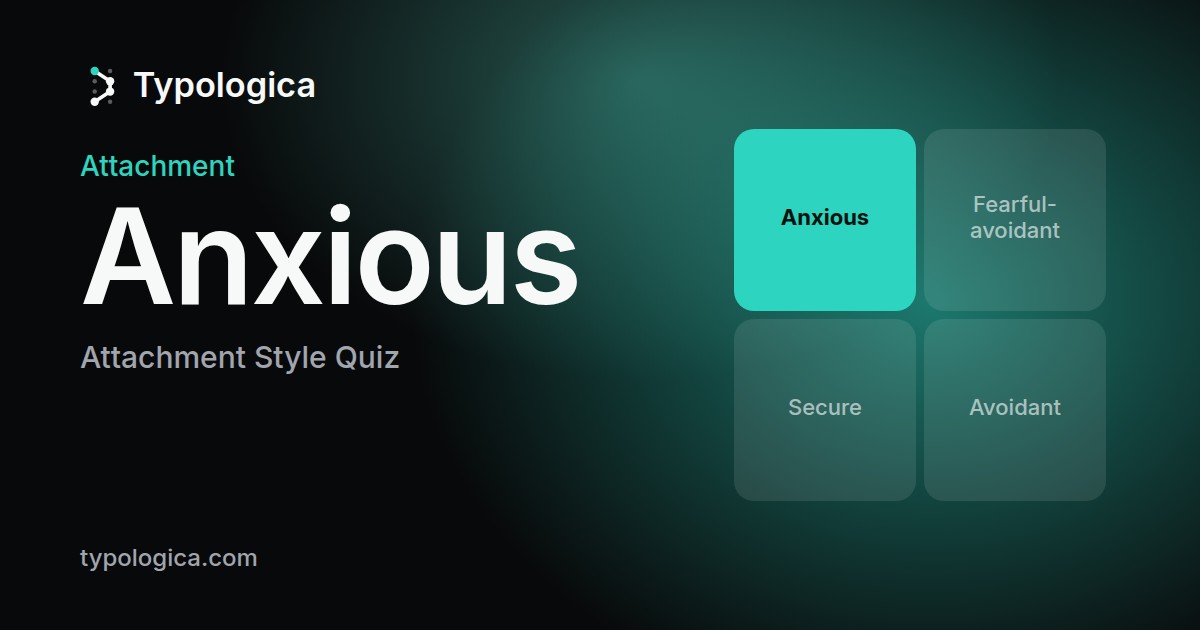
Anxious
The anxious style reaches for closeness and watches closely whether it holds.
Behind an ordinary day sits the thought that closeness could slip away, and a flat tone or a shorter text than usual gets noticed within minutes and replayed on the walk home.
Reassurance settles things, and the wish to hear it comes back. Asking takes the form of a direct question or of small tests, such as a message sent late at night to see how fast the answer arrives.
Disagreements feel large. A quarrel over the dishes can swell until it seems to concern the whole relationship, and the distress shows in the face and in the voice.
The same attentiveness picks up on moods and small changes quickly, and it shows in the effort put into remembering what matters to a partner.
When the urge to check arrives, this style can put a walk around the block in between before sending the message.
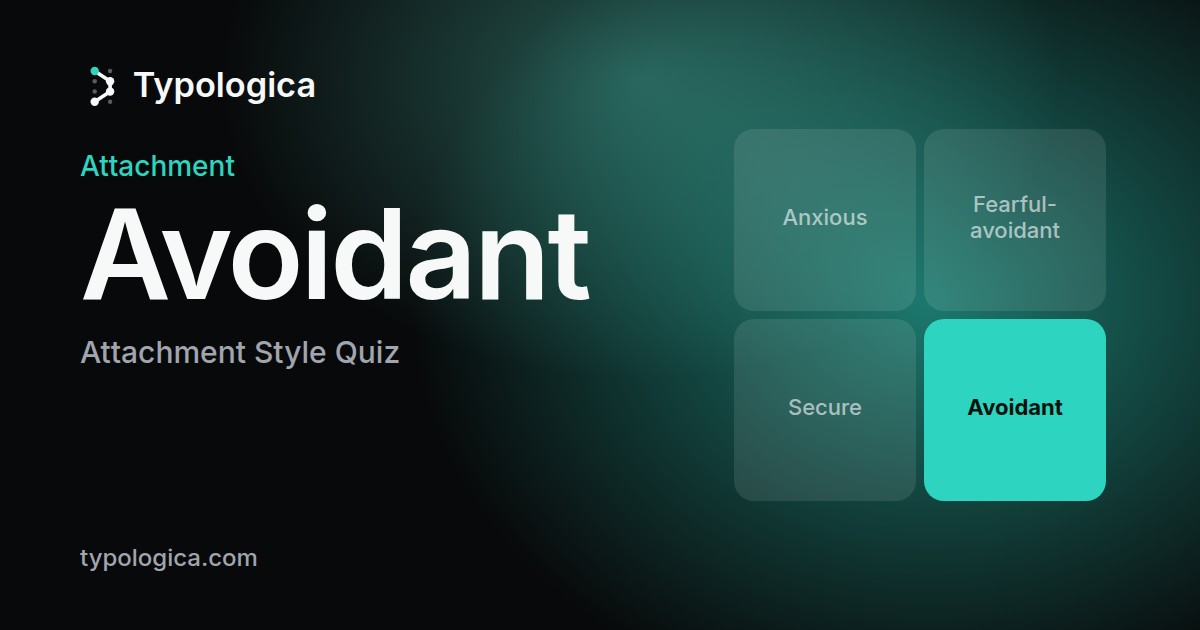
Avoidant
This type takes care of things alone and expects to ask little of anyone close.
Worries get worked out privately, on a long run or at a desk, and a partner hears about the decision once it has been made. Asking for a hand comes last on the list of options.
Composure holds through a week apart or a stressful stretch, and work and routines carry on as normal. A hard week gets summed up afterward in a sentence or two.
Measured amounts of closeness are welcome. A request for more time together, or strong feeling expressed by a partner, can feel like pressure and gets a light joke or a change of subject in return.
A partner may know the facts of a day and little of how it felt, since the inner life stays private.
It pays for this type to mention a plan to a partner while it is still a draft.
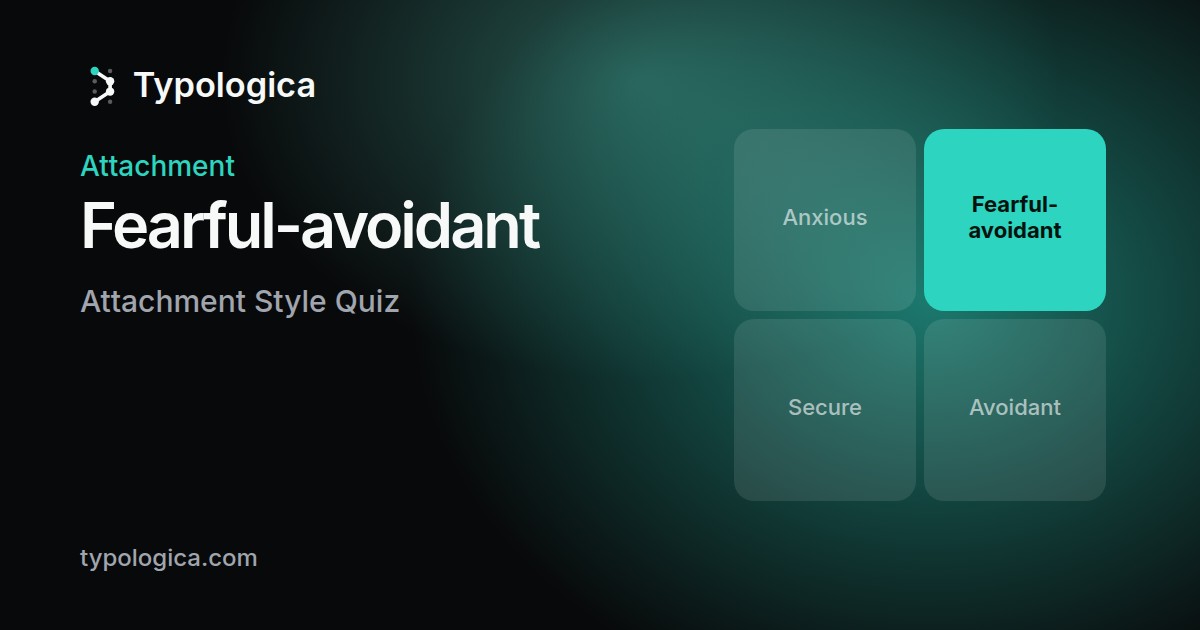
Fearful-avoidant
A fearful-avoidant style wants closeness and backs away from it in the same moment.
Wanting and fearing arrive together. Reaching for closeness brings dread of what follows, so a step toward a partner comes with a hesitation attached, such as a draft message that sits in the phone for an evening.
Reassurance-seeking and withdrawal share one relationship: one evening brings a long string of questions about where things stand, the next a closed door and a quick "I'm fine."
Feelings are shared in small pieces and then pulled back. A quarrel that grows can end in silence while the real subject stays unsaid, or in an apology sent within the hour.
The wish for connection is conscious, which is why the distance registers as a cost. A text left unsent at midnight says as much about that wish as one that goes out.
Writing down what was wanted from a conversation before answering a hard message is a habit worth having.
Keys 1–4 pick an answer
Continue the test?
Answers not sent
The result didn’t arrive because the site couldn’t be reached. All your answers are saved in this browser, so there’s no need to retake the test.
Your type:
One type that explains it all
Five tests, five results, and not one tells you why the same things keep happening to you. The CoreTypes system gives the answer many people spend years looking for: why your life plays out exactly the way it does.
Take the free testOther types
Select a type to read its description and compare it with yours.
About the test
Methodology
The quiz is built on the two-scale approach to adult attachment. The first scale, attachment anxiety, measures how closely a person watches whether closeness will hold and how much confirmation gets sought; its sides are Concern for the bond and Ease about the bond. The second, attachment avoidance, measures how far a person leans on a partner or prefers to handle things alone and keep feelings private; its sides are Independence and Reliance.
The 26 situations alternate between the scales, 13 each, and all concern a romantic partner, real or imagined. Every situation has four answers: two lean toward one side of a scale and two toward the other, with one strong and one mild answer on each side. A strong answer adds 3 points to its side and a mild one adds 1. Points are totaled separately for each scale, and the side with more points wins it.
The two winning sides give one of four styles: Secure, Anxious, Avoidant or Fearful-avoidant. The names mark areas of the field the two scales form, one quarter each, and someone near the edge of one area sits between two styles. The bar beside a winning side shows how strongly its answers were chosen, measured against the highest score it could reach. The quiz rests on a person's own answers about themselves. For further reading, a dictionary entry defines attachment style, and a magazine article looks at whether a style can change.
Author: Lex Tarrel, Creator of the CoreTypes system
Sources
- Fraley, R. C., Waller, N. G., & Brennan, K. A. (2000). An item response theory analysis of self-report measures of adult attachment. Journal of Personality and Social Psychology, 78(2), 350–365. doi:10.1037/0022-3514.78.2.350.
- Bartholomew, K., & Horowitz, L. M. (1991). Attachment styles among young adults: A test of a four-category model. Journal of Personality and Social Psychology, 61(2), 226–244. doi:10.1037/0022-3514.61.2.226.
- Fraley, R. C., Hudson, N. W., Heffernan, M. E., & Segal, N. (2015). Are adult attachment styles categorical or dimensional? A taxometric analysis of general and relationship-specific attachment orientations. Journal of Personality and Social Psychology, 109(2), 354–368. doi:10.1037/pspp0000027.
- Hazan, C., & Shaver, P. (1987). Romantic love conceptualized as an attachment process. Journal of Personality and Social Psychology, 52(3), 511–524. doi:10.1037/0022-3514.52.3.511.
Frequently asked questions
How accurate is the attachment style quiz?
The quiz totals the answers on two scales, one for anxiety and one for avoidance, and the winning sides name the style. The description that follows covers how that style shows up with a partner: what is expected from closeness, how worries are handled and how much gets shared. The description is written as a set of familiar scenes from close relationships.
What are the four attachment styles?
The four styles are Secure, Anxious, Avoidant and Fearful-avoidant, and each is one quarter of the field formed by two scales: attachment anxiety, which is how much worry the bond attracts, and attachment avoidance, which is how far a person leans on a partner or keeps to themselves. Secure is known for ease with relying on a partner, Anxious for a close watch over the bond, Avoidant for managing alone, and Fearful-avoidant for wanting closeness while keeping distance. Research writing calls Anxious anxious-preoccupied and Avoidant dismissive-avoidant. Every style carries its own strength and its own cost.
Can an attachment style change?
A style can shift with experience. Research describes avoidance easing after warm experiences of closeness. The result describes the pattern as it stands today.
Do I need a partner to take the quiz?
No. A past partner works as the reference, and so does the way a person expects to act with a partner. The questions focus on romantic partners, and a similar pattern shows up with close friends and other close people too.