Enneagram Test
Each of the 63 situations comes with three answers. Choose the one that sounds like you and go with the first reaction. The test takes about 12 minutes, and at the end you see which of the nine Enneagram types your answers point to, with a short profile of that type.
Type 9
Peacemakers, Type 9, make a room feel calmer just by being in it.
Asked where to eat, a Peacemaker answers that anywhere is fine, and a quiet evening at home suits them as well as a big outing. With family and friends they go along with the group's plan, sometimes before checking what they would choose themselves.
Listening comes naturally: they hear every side before saying anything, and discussions with them end with each person feeling included. Their even temper holds a team together through long, untidy projects, and people bring them the problem they cannot raise elsewhere.
Decisions can stay open for a long time, because choosing one option means turning down the others, and a postponed choice keeps everyone comfortable. Their own wishes surface late, and some get dropped on the way.
Naming one preference before the group decides, even a small one like the film or the restaurant, is a habit that suits Peacemakers.
Type 6
Type 6, the Loyalist, is the person who has already asked what could go wrong.
Loyalists read a plan twice and spot the contingency nobody arranged; they confirm the reservation and bring the spare charger. Teams lean on that attention and on their reliability, since a task they accept gets done and a promise they make is remembered.
They give trust slowly and keep it for years. A friend who says everything will be fine gets a follow-up question, and the answer matters more to them than the reassurance does.
Decisions swing between wanting a trusted person's opinion and pushing back on it. The same advice can be welcome on Monday and questioned by Wednesday, which leaves the people around them unsure what is wanted. In a group, they are often the first to notice a gap in the arrangements.
Loyalists gain from writing each worry down with one concrete response beside it.
Type 7
The Enthusiast, Type 7, has three plans for the weekend and room for a fourth.
A last-minute invitation to a day trip gets a yes, and the suitcase is packed before the details are confirmed. An evening with Enthusiasts rarely stays on one topic or in one place, which is why friends enjoy their company.
Enthusiasts pick up new subjects fast and connect ideas from fields that rarely meet. In a meeting they are the ones with the next suggestion before the current one is settled.
When a project reaches its slow middle, attention moves to the next appealing thing, and the unfinished one waits in a drawer. Hard conversations get postponed in favor of something lighter, and a commitment that closes off other options feels heavy, even when it is a good one.
It helps Enthusiasts to pick one open project a month and see it through the dull stretch.
Type 4
Individualists, Type 4, want to be understood as exactly who they are.
Mood and atmosphere register with them before facts do. They bring a personal touch to what they make, from the wording of a message to the color of a wall, and others often recognize their work at a glance. Ordinary routines get a twist of their own, such as a different route home or a rearranged shelf.
Close friends get depth from them and expect it in return; small talk wears them out. They notice sadness in others and can stay beside it without hurrying to fix anything. Handwritten notes and the right song for a moment matter to them.
They also compare. Seeing someone else's easier-looking path, they linger on how their own differs, and a good day can darken over a single comparison. A remark that shows someone noticed their particular taste is remembered for years.
Type 4 benefits from noting one ordinary good thing in each day without setting it beside anyone else's.
Type 1
Type 1, the Reformer, notices what is out of place and wants it put right.
Reformers hold themselves to clear principles and apply them evenly: figures get checked twice, and the typo in a printed handout is caught before anyone has read past the heading.
Friends can count on them. They keep their word down to the details of a promise, and they say so when something looks wrong, even if the room would prefer silence. A promise made in March is still on their mind in June.
A steady tension runs between how things are and how they should be. A finished task still shows its one flaw, and an open list makes rest hard to enjoy.
Weekends can turn into a second round of repairs, with a shelf to straighten and a form to refile.
It suits the Reformer to end each day by naming one thing done well enough and letting the list rest.
Type 2
A Helper, Type 2, notices what other people need before they ask.
Helpers remember what matters to people, such as an allergy or a difficult appointment, and group chats and birthdays rarely slip past them. At work they pick up the task nobody owns and cover for someone who has fallen behind.
Their warmth is real, and people feel looked after around them. They often give more than anyone asked for, from an extra hour of help with a move to a casserole left at the door, and they wave away the thanks. Friends in a hard stretch get a call without having to ask.
Their own needs get less attention. Asked what they want, Helpers often answer with what someone else wants, and a favor that goes unacknowledged stays with them for days. A weekend with nothing asked of them can feel strangely empty.
Before agreeing to a request, a Helper can ask what it costs them.
Type 3
Type 3, the Achiever, turns a goal into a plan before the meeting ends.
Achievers work quickly and adapt to a new setting within days. Setbacks get turned into the next plan within the hour. Targets give them energy, and a finished result that people can see is what they enjoy.
Others find them motivating, since they bring momentum and a clear next step. They are good at telling a room why a project matters, they show up for events and celebrate wins, and they enjoy being introduced for what they have done.
Shaping how they come across is a habit that grows with success. The tone of a story changes with the audience, and what earns approval in one group can crowd out what they actually think.
Showing a trusted person one unfinished or unremarkable piece of work each week gives Achievers practice at being seen, with no summary of results attached.
Type 8
Challengers, Type 8, say what they think and decide quickly.
When a group stalls or nobody owns a decision, they step in. They are direct about expectations, which makes a team feel steady in a crisis.
They protect their people firmly and expect straight talk in return. A disagreement is a normal part of a conversation, and they respect the person who disagrees to their face. Their generosity comes in big gestures, such as a ride at midnight or an argument fought on someone's behalf.
Pressure comes with the style. They push to see how far a rule or a plan can be bent, and the force that gets things moving can leave others feeling steamrolled. A mild question from a neighbor can be met with a much bigger answer than it called for.
In meetings, a Challenger can ask one question before giving an opinion, then wait for the full answer.
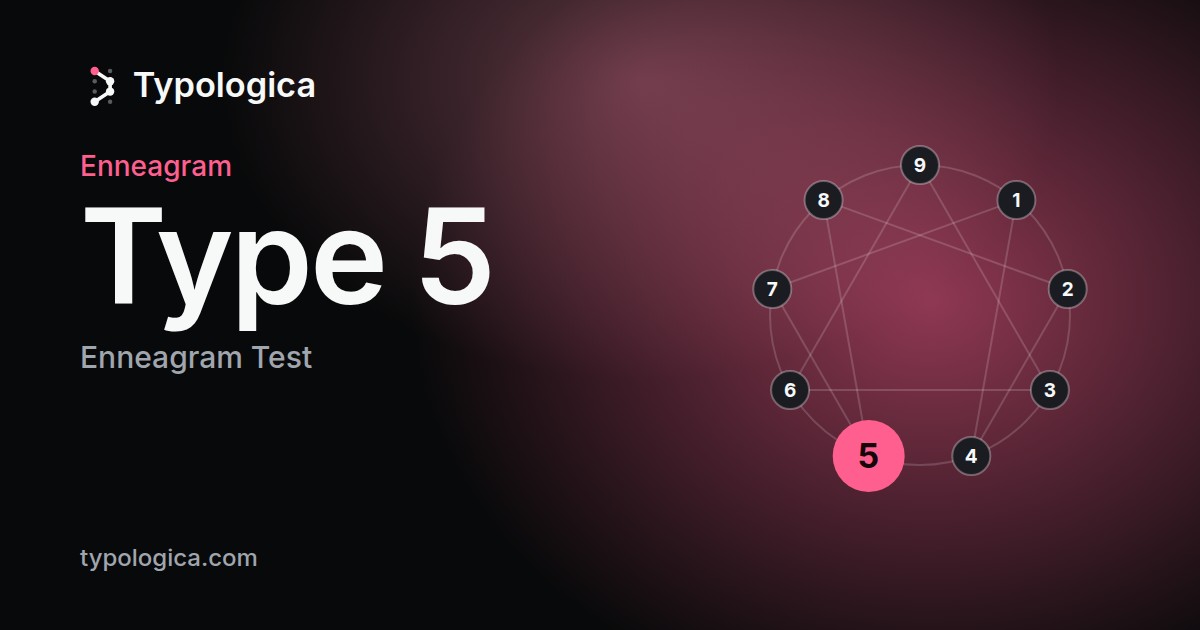
Type 5
The Investigator, Type 5, wants to understand a thing fully before joining in.
Investigators watch first. Their questions come out precise and few. Before a trip they have read about the place, and before a purchase they have compared the specifications. They form a view that rarely depends on who speaks loudly.
They guard their energy and their privacy, and prefer a few deep conversations to many short ones. Friends learn that a long silence usually means thinking.
Their independence shows in how they work. Given a puzzle and a free afternoon, they produce something thorough, and they notice patterns that others skim past. Manuals and quiet corners suit them.
They usually share less than they know, so a teammate may not hear a useful idea until it is complete, and by then the discussion may have moved on.
A practical habit for Investigators is voicing one half-formed thought a day to someone trusted, before it is polished.
Keys 1–4 pick an answer
Continue the test?
Answers not sent
The result didn’t arrive because the site couldn’t be reached. All your answers are saved in this browser, so there’s no need to retake the test.
Your type:
One type that explains it all
Five tests, five results, and not one tells you why the same things keep happening to you. The CoreTypes system gives the answer many people spend years looking for: why your life plays out exactly the way it does.
Take the free testOther types
Select a type to read its description and compare it with yours.
Tests in this system
About the test
Methodology
The test has 63 situations from everyday life, each with three answer options. An option describes what one type would do in that situation, and the options are distributed so that every type appears the same number of times. Each pick adds one point to the matching type, and the type chosen more often than any other becomes the result. When two types finish level, a fixed order of the nine types settles it.
The questions rest on the traditional Enneagram of personality, a model of nine motivational patterns. Each pattern is organized around what a person wants and what a person steers away from, and the nine are arranged as points on a circle.
The scoring looks at the motive behind an action, since two people can take the same step for different reasons. The nine result names label nine areas of the system's field, each one a recognizable cluster of motives, and a profile describes how that cluster shows up in daily life.
The test rests on a person's own answers about themselves.
For background reading, see this definition of a personality type and this overview of the Enneagram model.
Author: Lex Tarrel, Creator of the CoreTypes system
Sources
- Hook, J. N., Hall, T. W., Davis, D. E., Van Tongeren, D. R., & Conner, M. (2021). The Enneagram: A systematic review of the literature and directions for future research. Journal of Clinical Psychology, 77(4), 865–883. doi:10.1002/jclp.23097
- Sutton, A. (2012). "But is it real?" A review of research on the Enneagram. The Enneagram Journal, 5(1), 5–20.
- Norcross, J. C., Koocher, G. P., & Garofalo, A. (2006). Discredited psychological treatments and tests: A Delphi poll. Professional Psychology: Research and Practice, 37(5), 515–522. doi:10.1037/0735-7028.37.5.515
Frequently asked questions
How does the Enneagram test work, and how long does it take?
Each situation offers three answers, and every answer belongs to one of the nine types. The picks are tallied by type, and the type that collects more picks than any other is the result. The whole test is built for a single sitting of about twelve minutes, and going with the first reaction to each situation keeps the answers close to everyday behavior.
What is an Enneagram wing?
A wing is one of the two types beside the main type on the Enneagram circle, and it colors the main type's style: a Peacemaker may borrow some of the Reformer's precision or the Challenger's directness. This test finds the main type and does not score wings.
Can an Enneagram type change over time?
In the Enneagram model, the main motive behind a type stays the same through life. What shifts with age and circumstances is how that motive shows: the same Helper may give time at one stage of life and money at another, and a Loyalist in a calm season questions less than in a hectic one.
What does science say about the Enneagram?
Academic reviews of the Enneagram are collected under References. The model is a descriptive framework: nine portraits of motives that people compare with their own experience. The test shows which portrait a person's answers resemble more than the other eight.